Vape Industry Supply Chain Problems for Distributors & Wholesalers
In the global vape industry, many distributors and wholesalers rely on overseas manufacturers for OEM and private label vape products. However, the procurement process is often affected by multiple supply chain risks that directly impact business growth, brand stability, and market expansion.
Understanding these vape supply chain challenges is essential for companies looking to scale in competitive markets such as Europe, the Middle East, and North America.
1. High MOQ Pressure in Vape Manufacturing (Minimum Order Quantity)
One of the most common challenges in vape OEM sourcing is the high minimum order quantity (MOQ) required by factories.
For small and mid-sized vape distributors, high MOQ means:
- Heavy upfront investment
- Increased inventory risk
- Slower product testing cycles in new markets
This limits flexibility and makes it harder to respond quickly to market demand changes.
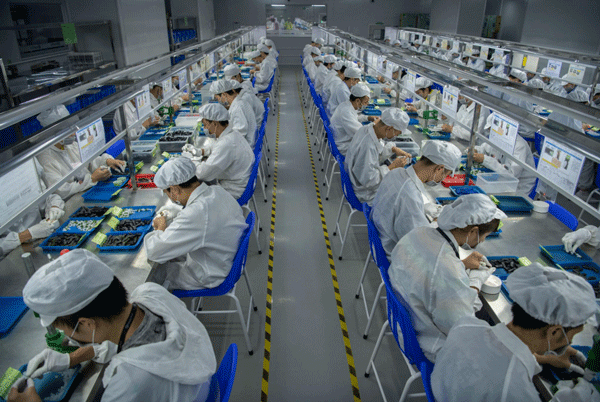
2. Unstable Delivery Time in Vape Supply Chain
Another major issue in vape wholesale supply chains is inconsistent production and shipping schedules.
Delays are often caused by:
- Production queue delays
- Raw material shortages
- International logistics uncertainty
Unstable delivery times can disrupt product launches and reduce competitiveness in fast-moving vape markets.
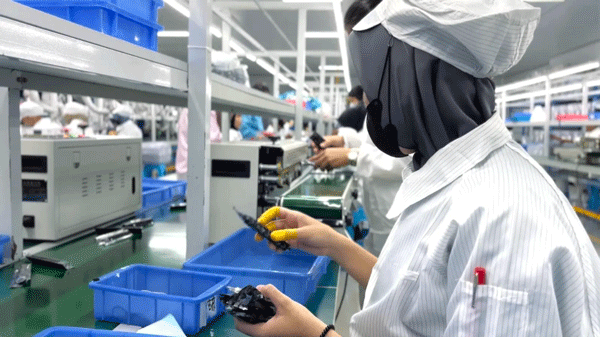
3. Inconsistent Product Quality Across Batches
Quality inconsistency is a critical concern for vape brands relying on overseas OEM factories.
Common issues include:
- Different flavor performance between batches
- Battery stability variations
- Device leakage or airflow inconsistency
Such problems can damage brand reputation and reduce customer retention in highly competitive vape markets.
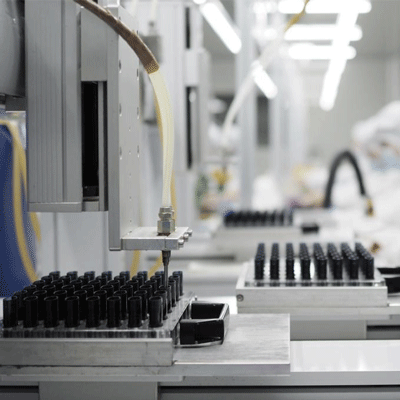
4. Lack of Compliance Documents (CE / RoHS / TPD)
For distributors targeting regulated regions such as the EU and UK, vape compliance requirements are essential.
However, many factories fail to provide complete documentation, including:
Without these documents, products cannot legally enter or be sold in key markets.
5. Impact on Global Vape Brand Expansion
These combined challenges create significant barriers for vape distributors and wholesalers:
- Higher operational costs
- Delayed product launches
- Limited market entry opportunities
- Reduced brand competitiveness
In today’s vape industry, supply chain stability is just as important as product innovation.

Conclusion: Why Supply Chain Stability Matters in Vape Business Growth
For vape brands and distributors, choosing a reliable OEM manufacturing partner is critical. A stable supply chain with controlled MOQ, consistent quality, fast delivery, and full compliance support can significantly improve long-term market success.
SEO Keywords (for backend / meta optimization)
- vape supply chain challenges
- vape OEM manufacturer
- vape wholesale supplier
- vape MOQ problem
- vape compliance CE RoHS TPD
- vape distributor issues
- vape factory China OEM
- e-cigarette manufacturing problems
Q1: What are the main challenges in vape supply chain for distributors?
The main challenges include high minimum order quantities (MOQ), unstable delivery schedules, inconsistent product quality, and lack of compliance certifications such as CE, RoHS, and TPD.
Q2: Why is high MOQ a problem in vape OEM manufacturing?
High MOQ increases upfront investment and inventory risk for distributors. It also reduces flexibility when testing new vape products in different markets.
Q3: Why do vape product delivery times often get delayed?
Delivery delays are usually caused by production scheduling issues, raw material shortages, and international logistics uncertainty in cross-border supply chains.
Q4: How does inconsistent product quality affect vape brands?
Inconsistent quality can lead to differences in flavor performance, battery stability, and device reliability, which damages brand reputation and reduces customer trust.
Q5: Why is compliance important in vape wholesale business?
Compliance documents like CE, RoHS, and TPD are required for selling vape products in regulated markets such as Europe and the UK. Without them, products cannot legally enter these markets.
Q6: How can vape distributors reduce supply chain risks?
Distributors can reduce risks by working with OEM manufacturers that offer stable MOQ policies, strict quality control, reliable delivery systems, and full compliance documentation support.